After years of promises to put “America First,” many Americans are questioning whether the Trump administration’s policies have delivered meaningful benefits or simply created economic uncertainty, international tension, and domestic division.
The administration’s aggressive use of tariffs has disrupted supply chains, increased costs for businesses, and ultimately burdened consumers with higher prices. Rather than strengthening America’s economic position, trade wars have often created uncertainty for manufacturers, farmers, and exporters.
Its extensive reliance on sanctions as a foreign policy tool has strained relationships around the world while producing mixed results. Economic pressure alone has rarely delivered lasting diplomatic solutions and has often escalated tensions rather than resolving them.
Critics also point to policies toward countries such as Venezuela and Iran, arguing that confrontational approaches have increased instability and geopolitical risks without producing clear strategic victories. Foreign policy appears reactive and inconsistent rather than guided by a coherent long-term vision.
Meanwhile, Americans continue to struggle with the cost of living. Despite promises to bring prices down, gasoline prices remain volatile, and households continue to feel the effects of persistent inflation. Food, housing, transportation, insurance, and everyday necessities have become increasingly expensive, placing additional pressure on working families.
Concerns about employment and economic security have also persisted. Industries affected by trade disputes, slowing investment, and economic uncertainty face mounting challenges, leaving many workers and business owners wondering where the economy is headed.
The administration has simultaneously pursued increasingly confrontational relationships with key trading partners including China, Canada, and Mexico. These countries are not only competitors but also some of America’s largest customers and closest economic partners. Rather than creating stable and predictable trading relationships, these disputes have often generated uncertainty for businesses trying to plan.
Perhaps nowhere are the consequences more visible than in rural America.
Imagine a typical American farmer.
He begins the year paying significantly more for fertilizer, seed, machinery parts, transportation, equipment maintenance, and household necessities because inflation has increased costs across nearly every aspect of life and business. He then pays more to fuel tractors, combines, trucks, and irrigation systems because of higher gasoline and diesel prices.
Next, he watches one of his largest international markets disappear. Years of work building export relationships with China are jeopardized or lost because of tariff battles and retaliatory trade measures. Crops that once had a dependable overseas market now face uncertainty, lower prices, or reduced demand.
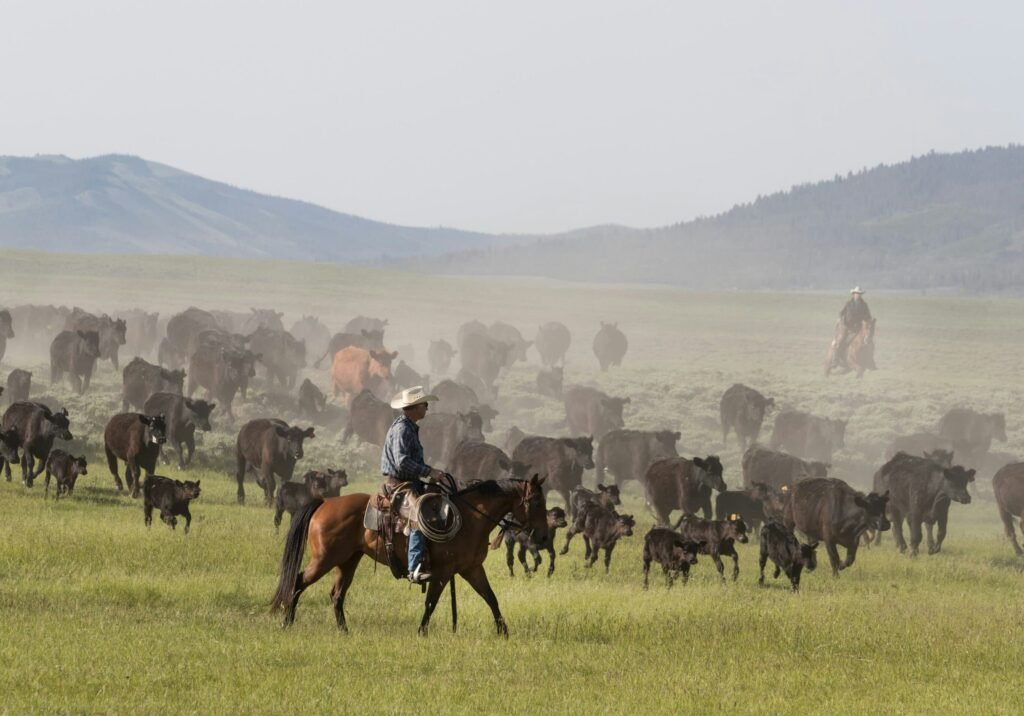
His cattle-ranching neighbor faces a different but equally troubling challenge. While being told that protectionist policies are defending American producers, he suddenly finds himself competing with imported beef from Argentina. Domestic producers are left wondering why they are being asked to sacrifice export markets while simultaneously competing against increasing imports.
The farmer’s uncertainty grows. He does not know whether he can reliably sell products to nearby trading partners such as Canada or regain access to distant but critical markets such as China. Long-term planning becomes nearly impossible when tariffs, trade disputes, and political confrontations can alter market access overnight.
Then comes the labor crisis.
Like many farms across America, his operation depends on hardworking immigrant labor willing to perform physically demanding seasonal and agricultural work. Following aggressive ICE raids and mass deportation initiatives, many experienced workers disappear from the local workforce. Labor becomes scarce, wages increase, harvest schedules are disrupted, and some crops risk being left in the fields. Finding replacements proves difficult because few local workers are willing to perform the same work under the same conditions.
Suddenly, the farmer finds himself squeezed from every direction:
- Higher costs due to inflation.
- Higher fuel expenses.
- Lost export markets because of tariffs.
- Growing competition from imports.
- Uncertainty in international trade relationships.
- Labor shortages caused by immigration enforcement actions.
For many farmers, ranchers, and agricultural communities, the question becomes simple: How can you prosper when it costs more to produce, there are fewer markets to sell to, more competitors are entering your market, and the workforce needed to sustain your business is disappearing?
At the same time, critics argue that the administration has approached government as if it were a private corporation. Key positions have too often appeared to be filled based on personal loyalty rather than expertise, competence, and institutional experience, leading to inconsistent decision-making and weakened public confidence.
Government is not a private business. A nation of more than 300 million people cannot be managed through loyalty tests, impulsive decision-making, or personal grievances. It requires experienced leadership, strategic vision, institutional knowledge, respect for expertise, and accountability to the public.
The central question facing Americans is no longer whether these policies generate headlines. The question is whether they make the country stronger, more prosperous, and more respected around the world, or whether they leave Americans facing higher costs, greater uncertainty, weaker alliances, labor shortages, and a more divided society.
The promise of “America First” sounds appealing. But if American farmers lose customers, American consumers pay more, American businesses face uncertainty, and American communities lose vital workers, then it is fair to ask:
America First for whom?
Strong nations are built on competence, stability, accountability, strategic vision, and inclusive economic growth, not on division, uncertainty, and loyalty above expertise.